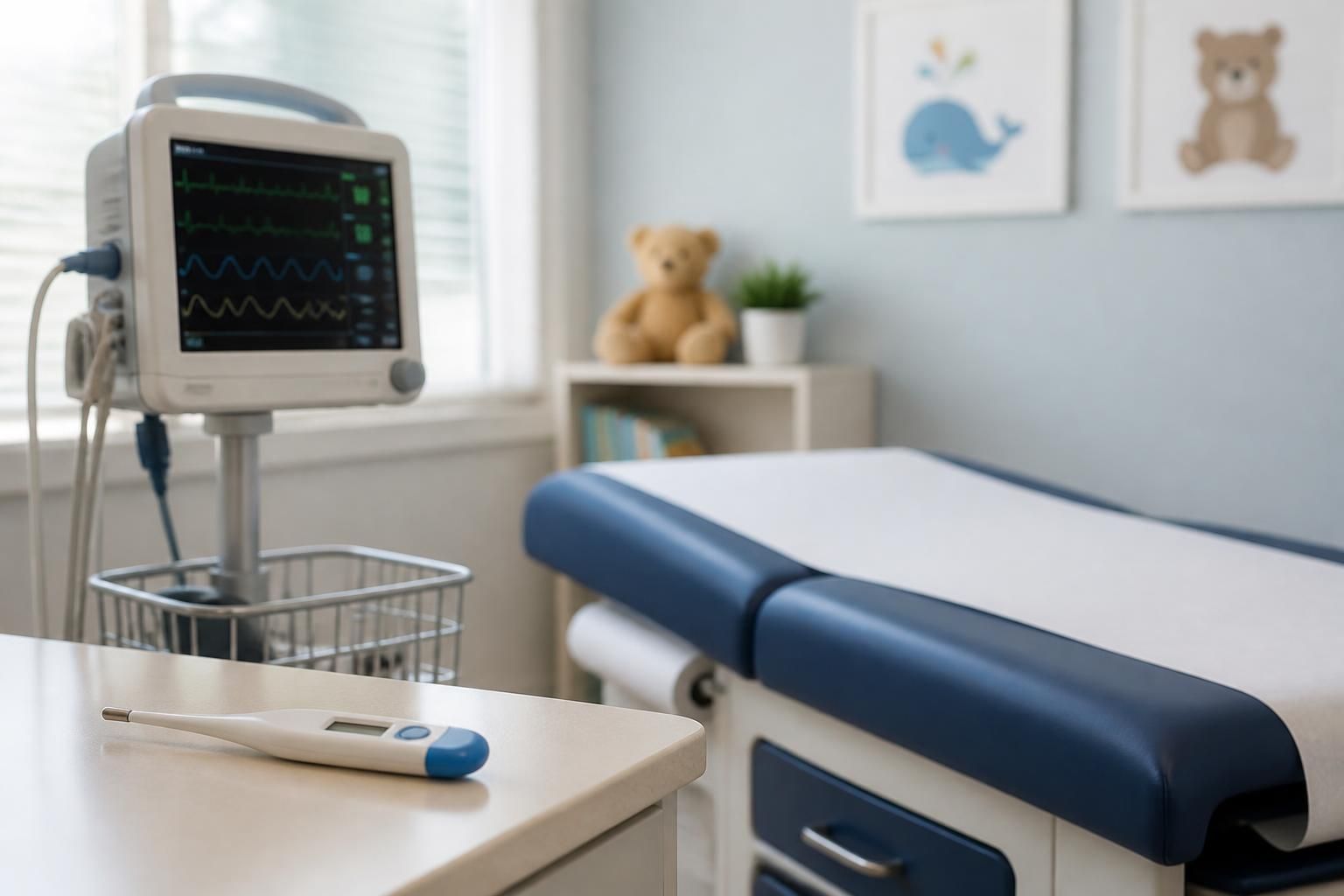
A fever can leave your child tired, uncomfortable, and hard to settle, especially when it comes with cough, sore throat, body aches, or a stomach upset. If you are watching a temperature climb and wondering whether it is something you can manage at home or needs a visit today, we can help sort that out.
ABC Pediatric Urgent Care - Eugene Chung, MD sees children and young adults ages 0 to 21 for fever treatment at our Ashburn, VA clinic. Walk-ins are welcome, no appointment is needed, and we are open seven days a week from 11:00 AM to 11:00 PM for same-day care when your child needs to be seen.
Fever is often the body’s response to an infection, but the number on the thermometer is only part of the picture. What matters most is how your child looks, feels, and behaves. A child with a mild temperature who is drinking, awake, and active may need simple home care, while a child who seems more ill should be checked by a clinician.
We evaluate fever based on the full set of symptoms, not just the temperature reading. That helps us determine whether the issue is likely related to a cold, flu, infection, allergy, or another illness that needs treatment.
At ABC Pediatric Urgent Care, fever treatment starts with a focused visit to understand what is driving the temperature. We ask about symptoms, hydration, recent exposures, and how long the fever has been present. From there, we may recommend testing or a closer look at the throat, ears, lungs, skin, or abdomen depending on what your child is experiencing.
Our goal is to find the cause when possible and give clear next steps you can follow at home.
Fever visits are meant to be straightforward, especially when you are juggling a sick child. We keep the process focused so you can get answers without a long wait for an appointment.
Because fever can show up with many different illnesses, a targeted visit often saves time and helps you avoid guesswork.
Not every fever needs a complicated plan. Many children improve with rest, fluids, and close observation. Still, it helps to know what to monitor and what changes mean the illness is not improving as expected.
We often talk through practical home care points such as hydration, appetite changes, and comfort measures. If medication is part of the plan, we explain how to use it based on the child’s symptoms and age.
If the fever is paired with worsening cough, trouble swallowing, repeated vomiting, or increasing weakness, it is a good idea to have the child reassessed.
Fever treatment is not one-size-fits-all. A school-age child, a teen, and a toddler can show illness very differently. That is why we tailor the visit to the patient’s age, symptoms, and overall condition.
ABC Pediatric Urgent Care - Eugene Chung, MD provides fever care for children and young adults ages 0 to 21, so older teens and young adults can also be seen when fever is affecting daily activity, school, sports, or work.
Young children may not describe symptoms clearly, so we pay attention to behavior changes, appetite, sleep, breathing, and hydration. Parents often notice the first clues, such as clinginess, irritability, or less energy than usual.
Older patients may be able to describe sore throat, chest tightness, stomach upset, or body aches more clearly. We use that information along with the exam to decide whether testing or follow-up care is the right next step.
It is reasonable to seek fever treatment when symptoms are not improving, when the illness is interfering with drinking or eating, or when you want a clear medical opinion before the problem gets worse. Walk-ins are welcome, and our extended daily hours make it easier to get care after school, after work, or later in the day.
Families come to us for fever care along with related concerns such as illness visits, vaccination services, sports physicals, minor procedures, and new patient visits. If fever is connected to another issue like an infection, asthma flare, skin problem, or injury-related concern, we can assess the full picture during the visit.
Fever may come with chills, sweating, headache, sore throat, cough, congestion, body aches, stomach pain, vomiting, diarrhea, or fatigue. The combination of symptoms helps point toward the cause.
Yes. Depending on the symptoms, we may use on-site lab testing and a physical exam to look for signs of infection or other causes of fever.
That depends on the child’s age, the length of the fever, and how sick they appear. If the fever is paired with concerning symptoms or is lingering, a visit can provide clarity.
Fever with cough can happen with a cold, flu, or other respiratory illness. We assess breathing, lung sounds, and other symptoms to help decide what is going on.
Yes. Fever with vomiting, diarrhea, or abdominal discomfort is a common reason for a visit, especially when hydration or appetite is affected.
Yes. We treat patients from birth through age 21, including teens and young adults who need prompt evaluation for fever and related symptoms.
If your child or young adult needs fever treatment in Ashburn, VA, visit ABC Pediatric Urgent Care - Eugene Chung, MD at 23634 Strickland Dr #110, Ashburn, VA 20148, USA. We are open Monday through Sunday from 11:00 AM to 11:00 PM. Call (703) 687-6822 if you need help before you arrive.
Fever can be stressful, but a focused visit can help you understand what is causing it and what to do next. When you are ready for answers, we are here to help.

Ready When Your Child Needs Care
Call our Ashburn office to ask about walk-in visits, same-day availability, or the services best suited for your child or young adult.